

I wanted to believe in Bitcoin. I really did.

I first encountered the Ur-Crypto about twelve years ago, when I saw a widget on a website for payment in it. The branding was great - I was able to intuit from the very name that it was not just another method of sending dollars over the internet, but an actual competing currency that used the existing infrastructure of the internet as part of its payment system.
When I read the white paper, I was immediately captivated. The technology seemed to represent a real possibility of checking the government’s ability to tax via inflation. The strongest parallel to me seemed to be BitTorrent’s check on excessive DRM in PC games. The government could make an example of careless pirates here and there, but due to the peer-to-peer nature of the system, they couldn’t really shut it down.
Over the next few years I dabbled in Bitcoin here and there. I was never all that interested in it as an investment; I was simply hoping for an increase in adoption as a competing currency to the dollar so I could spend it more often, like at Porcfest, the annual gathering of the Free State Project in New Hampshire. Although it was difficult my first year there (2018) due to the then poor cellular connectivity in the White Mountains, it still felt worthwhile as part of a global monetary revolution.
In the years since, I kept hearing about all these breakthroughs with the technology such as Segregated Witness (SegWit), which moved signature data outside of transaction IDs and increased the blockchain’s block size from 1 MB to 4 MB. The latter change was controversial because many in the community thought the increase should have been much larger to help the chain scale and prevent transaction fees from becoming excessive. The “small block” camp maintained that this would compromise the security of the chain by making the ratio of mined block rewards to transactions too low. This dispute resulted in the famous hard fork of Bitcoin Cash (BCH) from Bitcoin (BTC) in 2017. The Porcfest 2018 debate between proponents of BTC and BCH was so technical and jargon-heavy that I, a finance bro and not a programmer, could scarcely make heads or tails of it.

In terms of number-go-up, BTC has had BCH’s number. In 2017 alone, BTC increased from $1,000 to $18,000 (I sold at $2,000 to pay for moving expenses, ouch). It continued to climb in 2018 with the launch of the Lightning Network, a layer on top of the BTC blockchain designed to facilitate everyday transactions (so, an alternative to what the BCH hard fork intended to facilitate). Wall Street started to take notice, and BTC ATMs began to pop up. BTC’s future seemed very bright.
At the same time, however, something seemed off to me. Big institutional players such as BlackRock were preparing to roll out ETFs for retail investors to gain exposure to BTC, yet there was very little adoption of Bitcoin as actual currency. At Porcfest, the percentage of vendors who accepted BTC (or any crypto for that matter) has declined from more than 50% to less than 20%. If the most enthusiastic proponents of cryptocurrency were dropping the stuff, general adoption faced much greater hurdles.
The Fungibility Problem
Around 2019, I heard about Monero (XMR) from Christopher Cantwell. Monero is a privacy coin incorporating certain more cash-like features (new addresses for every payment, blinded keys to obscure which addresses share an owner) that Satoshi Nakamoto (the pseudonymous author of the Bitcoin white paper) recommended, but which were never implemented in Bitcoin or Bitcoin Cash.
Bitcoin’s blockchain is transparent. Anyone can see anyone else’s transaction using a block explorer. The parties’ identities are hidden behind their wallet addresses, but this is only pseudonymity, not anonymity. Realizing that Bitcoin lacked such a basic privacy feature made me skeptical. Its popular treatment was as a store-of-value investment like gold, not a medium of exchange that competed with the dollar. But despite gold’s lack of portability compared to Bitcoin, at least gold is fungible. Fungibility measures the degree to which one unit of money is not distinguishable from another unit. A fully fungible money, therefore, does not present any concern that any particular unit will carry any more information about its owner than any other unit when it is exchanged. Information about our transactions is an asset that we do not wish to disclose to others without compensation, so Bitcoin, because it transparently constructs send amounts from previously unspent amounts particular to the sender, lacks true fungibility. If A is a criminal and pays B with Bitcoin, B could be unwittingly implicated in the crime because the amount he receives carries the mark of A’s theretofore unspent amounts.
Privacy coin blockchains are opaque, however. Monero uses RingCT cryptography to hide the sender’s identity. The true send is mixed with 15 other decoy sends, which are real sends from earlier completed transactions on the blockchain. Thanks to a clever procedure called Pedersen commitments, the amounts of these sends are hidden from external observers. Because amounts can vary infinitely, there is a large anonymity set to draw from. In addition, the selection of the decoy sends is according to a gamma distribution, which mimics the pattern by which real sends are drawn from the total funds in a wallet (more recent deposits are more likely to be drawn down first). It is statistically difficult to gather any information about the sender in any Monero transaction, and difficult to the exact same degree for each transaction, due to the fixed number of decoy sends. [In a planned upgrade,] Monero’s RingCT mixing procedure will no longer use a selection of 16 spends but [will be] upgraded to use the entire chain’s transaction history (Full-Chain Membership Proofs), endowing the coin with near-perfect fungibility with respect to the sender. Thus, Monero satisfies the fungibility criterion for sound money much better than Bitcoin.
Monero has other great privacy features as well, and coins such as Zcash and Pirate Chain have some even stronger privacy features than Monero. I compare Bitcoin with privacy coins because privacy coins have significantly more utility as a medium of exchange. Many Bitcoiners agree with this, even though they recommend Bitcoin as a store of value.
What Money Is For
Where I part company from Bitcoiners is my conviction that BTC’s touted “digital gold”/store-of-value function is, under a correct understanding of money, wholly derivative of its function as a medium of exchange, and this function depends on whether it can record shifts in value-creation share among an economy’s participants.
Value creation means giving someone something they want, not the subjective value of the good itself. When I buy a Coke, Coca-Cola does not know how precisely refreshing that drink is to me; all they know is that I was willing to reduce my claim on the economy’s total wealth by the price of the Coke because I valued the refreshment more than that price. Because a sound money supply does not change (or changes negligibly), the transaction is zero-sum in monetary terms - my loss in wealth is their gain - but in terms of value the game is win-win; I enjoyed the Coke and Coca-Cola enjoyed being paid for it.1
Money facilitates exchanges by solving the indivisibility problem of barter. Suppose that Robinson Crusoe has just met Friday. Suppose also that Friday’s only possession is the raft he drifted in on. Crusoe wants the raft but has only one fish to offer. The fish may represent only half the value-creation share of the raft, but half a raft is useless.
The solution is to intermediate with a more granular asset, something like beach glass or cowrie shells. Trust is a crucial element here. Crusoe will only accept money instead of barter with Friday if he trusts that Friday will reciprocate. Otherwise, the glass or shells are not even worthless money; they are not money at all.
Convenience Beats Inflation
The criterion of trust raises an important question about BTC: Do we early adopters of crypto trust the majority of other economic actors to follow us? I’d say we shouldn’t.
The US dollar is an objectively terrible product, having lost more than 95% of its value over the past 100 years. Yet people the world over still can’t get enough of it. This is because it benefits from a substantial network effect combined with immense convenience. Most other government currencies suffer from even worse inflation and lack proper integration with networks such as credit card processing and SWIFT.
Bitcoin usage, especially with the Lightning Network, is relatively quick and easy - just scan a QR code and hit send - but even this doesn’t match tap-to-pay for convenience. And convenience is all the overwhelming majority of people care about. They are not ideological about things like inflation and don’t care that there are vast outfits of middlemen staffing banks and credit card companies. Over many decades, these middlemen have found ways to integrate their networks with retail products that provide so much convenience that cryptocurrency remains, at best, a speculative curiosity to the public.
Buying to HODL
Bitcoin’s flaws are hardly limited to its fungibility shortcomings. On-chain transaction fees are high due to the block size remaining at 4 MB, the Lightning Network suffers reliability issues, and Bitcoin’s primitive nature as the original cryptocurrency remains a problem. Recently, the Coldcard hardware wallet for Bitcoin was hacked with an exploit of weak entropy in its seed generation.2 The Coldcard was the gold standard in wallet storage for the most hardcore Bitcoin enthusiasts, those called “maximalists” (“maxis” for short), who acquire as much Bitcoin as possible and no other coins. People lost millions of dollars in BTC from this.
Even Bitcoin’s much-touted feature of its hard cap of 21 million minable coins is arguably a bug. The act of mining is what secures the blockchain network. As this cap is approached, there will be fewer new coin drops for miners until only transaction fees will then incent them to continue mining. There will only be enough adoption to create the necessary transaction volume if Bitcoin becomes more convenient to the public than fiat currency. It is difficult to see that happening given how BTC’s limitations stack up against monsters like the US dollar. Wall Street seems to be wising up to Bitcoin’s limitations and is shifting to stablecoin cryptocurrency, which offers the advantage of low international transaction fees compared to fiat currencies without the volatility of non-pegged cryptos.
Monero addresses many of Bitcoin’s problems through features like dynamic block size scaling and perpetual coin drops for miners. Although the latter is inflation, it is of an equitable kind, predictable with perfect mathematical precision, much more akin to gold mining than the shenanigans of government treasuries and central banks. I buy Monero through RetoSwap, which is Tor-based peer to peer trading software, and use it where I can, primarily to pay for my website’s hosting.
Monero has a great cypherpunk subculture surrounding it, which I enjoy being a part of, and I enjoy the security of transacting privately, of being my own Swiss bank. But unlike the Bitcoin maxis, I am not under any illusions that the public can be persuaded to value anything more than basic convenience. I don’t think governments and their banker cronies are going to cut themselves out as by substituting blockchain currency for theirs.
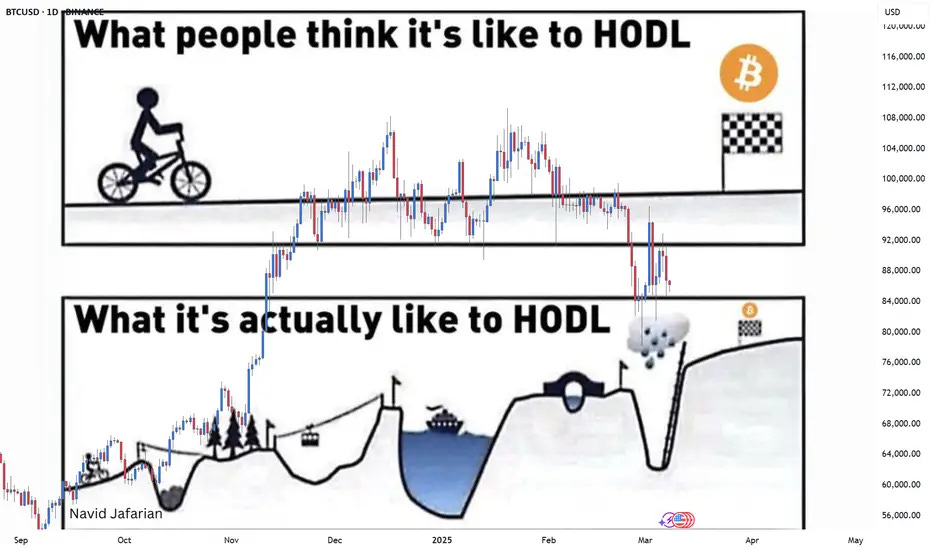
BTC maxis will never be persuaded out of their devotion to the OG coin, so as long as they keep buying to HODL, Bitcoin will never go to zero. The value of money is ultimately in the subjective eyes of its beHODLers.
For this reason, I think Curtis Yarvin is on to something when he describes a governmental fiat money like the US dollar as equity. Money is “master equity,” a share in the value creation of the total commercial economy.
In its security advisory, Coinkite states: “The COLDCARD devices themselves were not hacked, remotely accessed, or taken over. A firmware bug in affected releases caused weakened seed generation. Attackers exploited those weak seeds offline by regenerating the corresponding private keys and stealing funds.”

No my treasure hoard