

Over the summer, we had Bingo Bobbins’s Tortuga Fitness Challenge, and now we have the start of another mighty entry in Tortuga Society’s efforts to make healthy pirates. This is the Hyperborean Project. - Ed.
BOOK 1: BUILDING THE BETTER BEAST
CHAPTER ONE
Work it harder
Make it better
Do it faster
Makes us stronger
More than ever
Hour after hour
Our work is never over
- Harder Better Faster Stronger, Daft Punk
Before the internet was a library, it was a collection of taverns (not a series of tubes, no matter what Ted Stevens said). And in the tavern where serious men talked about serious chemicals - what the Olympians enhanced their biochemistry with, or the Tour de France winners boosted themselves up with, what the guys in the MLB and NFL and NBA clubhouses juiced with when the testers weren’t looking - there was a man who went by the name DatBTrue.

You probably don’t know him; most people don’t. He was a legendary anon whose forum was the proving grounds for the elite’s frontier protocols, passed along by coaches, trainers, pushing-the-envelope sports medicine doctors, and the pharmacists who worked with the pros. These secrets never made it into any textbook because they were too valuable to publish, so if you wanted to know what the top of the sport looked like from the inside, you went to Dat’s board.
His core claim was simple: nothing useful happens without exercise. You can take everything in the pharmacy, he’d say, but it won’t matter if you don’t train. Drugs improve your recovery and let you do more with what you’ve got, but without the stimulus of exercise, you’re just wasting your money and your time.
But one day, someone showed up on Dat’s board and said: It ain’t necessarily so. Androgens - testosterone, nandrolone, trenbolone, the whole armamentarium - don’t just amplify the training stimulus: they are the stimulus. Give a man enough testosterone (especially some of the hyperperformative analogues), and enough protein, and his body will build muscle without him ever touching a weight. The endocrine system is that powerful. You get muscle, strength, the whole package, without the exercise.
Dat, who knew more about this territory than almost anyone alive, conceded. That was one of the only times I ever saw him get mogged on his own board. He took it with grace, because he was committed to an honest reading of the science. He said, “Fine, yes, you can build and maintain muscle with androgens and protein. It’s damned inefficient, so why wouldn’t you also exercise? You’ll get a lot further in the same time frame, with even a modest time investment.”
Let me address the reader who just read the DatBTrue concession and thought, “Great! I’ll take the androgens and skip the workout.” You can. But the muscle you build that way is plastic surgery - the appearance without the substance. It looks like the muscle on the weight-lifter, but it doesn’t perform like his. Training produces a body that lives longer, resists disease, and keeps the mind sharp even after the look starts to fade.
Why pay the full price of the chemicals for a fraction of the return, when the same chemical investment multiplied by the training stimulus gives you the whole thing? The claim “nothing happens without exercise,” while technically false, is still practically true.
WARS THAT SHOULDN’T BE FOUGHT
Cardio vs. resistance. High intensity vs. high volume. LISS vs. HIIT. Free weights vs. machines vs. resistance bands. The internet has spent two decades fighting these battles. Two decades of comment-section wars fought by people who’ve never met each other, over training methods they’ve never tried, who are never wrong about anything because they never tested anything. The answer has always been the same: in the right proportion, for your goals, both.
Resistance training builds the machine, cardio builds the engine, and mobility work keeps the chassis from falling apart. The lifting-only guy has horsepower with no endurance. The running-only guy has endurance with no power. The man who does both (and stretches) is the whole machine.
The question of proportion is a personal one. Powerlifters train differently from marathoners, and both of them train differently from hybrid athletes who want to be good at everything. It depends on your goal.
THE MOBILITY LAYER
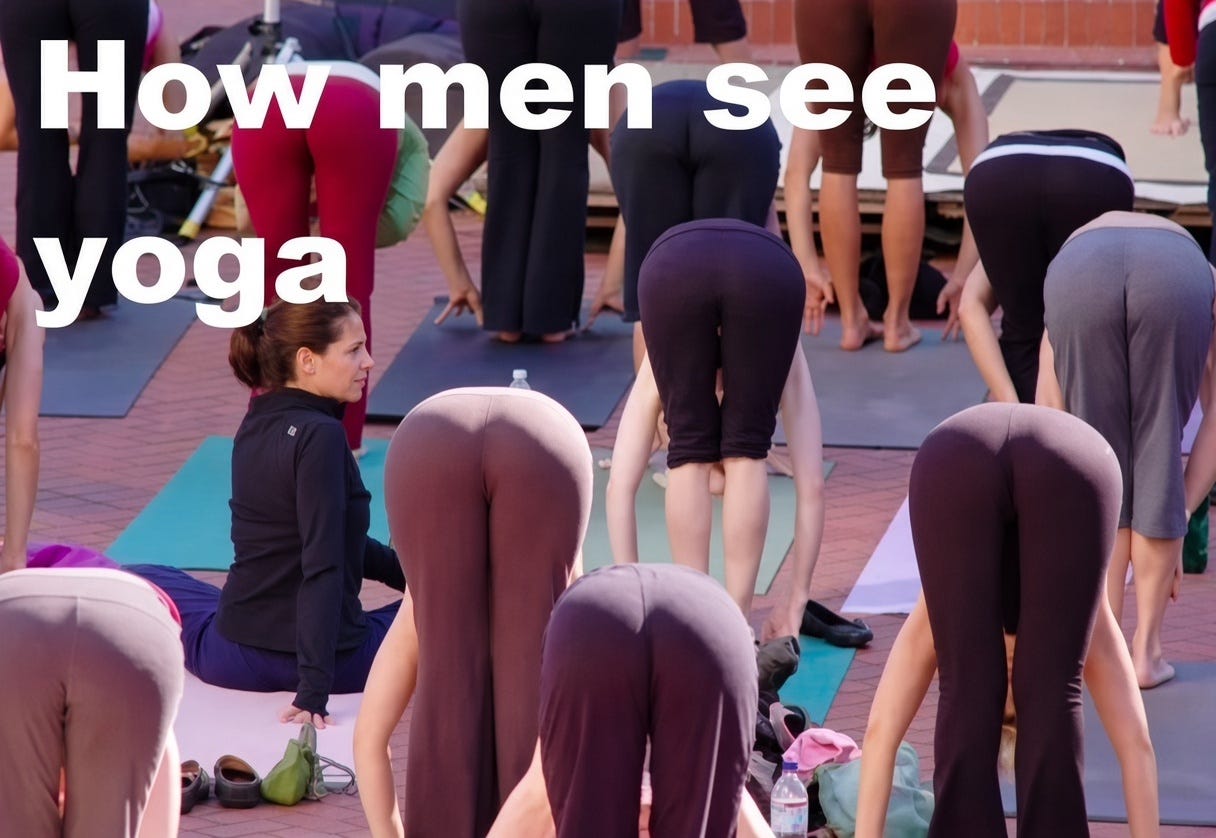
The gender gap is real. Women do yoga and pilates, but men (gymnasts and yogis aside) don’t. This costs the men their hips, hamstrings, lower backs, and quality of life at fifty. (Fifty arrives faster than you want to believe when you’re in your twenties. If you can’t touch your toes at thirty, you can’t get off the floor after your back gives out at sixty.)
Yes, there’s a lot of woo-woo attached to the flexibility world: chakras, energy flow, mystical language that makes the whole practice feel like something that belongs in a New Age retreat rather than a gym. Ignore all of that. It’s packaging. The stretching, mobility work, and range of motion training is as practical as the squat and the deadlift. Mobility has been part of athletic training for as long as there have been coaches. Your coach taught you to stretch, right? The coach wasn’t wrong.
WHAT EXERCISE DOES TO THE BRAIN
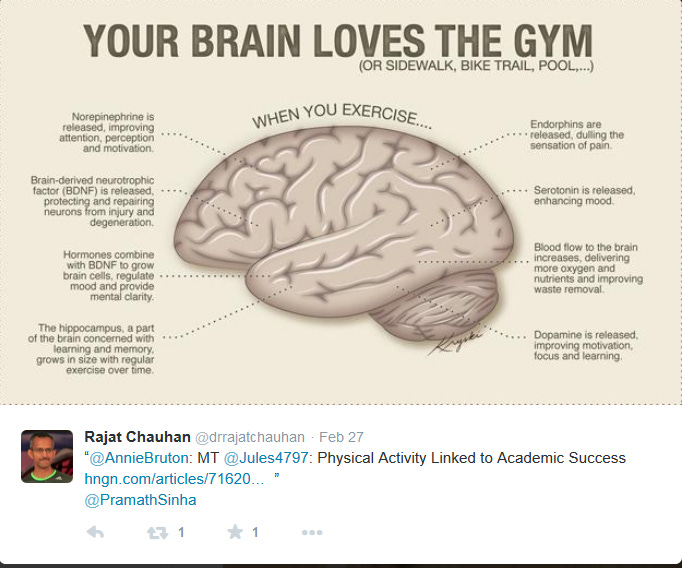
The brain is not a muscle, but it does respond to training. The same work that builds the body builds the brain, and by the same logic: stimulus, adaptation, growth. Aerobic work releases BDNF, the growth factor that neurons use to wire and rewire. It grows the hippocampus or memory center and sharpens executive function. You are building the body and getting the brain for free.
THE LONGEVITY CONNECTION
Muscle mass is the predictor of longevity; resistance training prevents the sarcopenia that kills the elderly. And it isn’t just muscle mass. VO2 max, resting heart rate, blood pressure, balance, grip strength, cognition, metabolic blood markers, all of them improve with exercise, and all of them predict healthspan. Exercise costs nothing, requires no prescription, and outperforms most of the expensive longevity interventions. Longevity clinics will sell you IV drips and supplements, but if you’re lifting and walking, you’re getting the better return on investment. Build the body and you extend the life: the bridge to the “Your Next Century” section of the project.