


My friend from college texted me: “I’m okay — deep diving into this weird fear/belief that I can’t provide for myself. That I somehow lost the capacity the second I started being more authentic and prioritizing my inner peace.”
B.S., I thought.
The friend in question used to be one of the most capable human beings I knew, but when Covid hit, she took a “sabbatical” because she was working too much and would “lose herself.”
She moved to a Western-town-Disneyland built for rich Californians, “to be closer to nature.” In the past six years, she hasn’t worked, and she never started any of the six business ideas she used to tell me about. She “wasn’t sure they were really in tune” with her spirit.
This friend of mine left a bad marriage and never remarried. Never had children, because she “was very independent and valued her self-reliance.” I suspect she didn’t allow herself to meet a serious and capable man, because what if he turned out to be a Republican? Instead, her relationship with a younger (suitably liberal) Californian masseur ended this year when he left her for a younger woman. Now, her landlady wants to sell the house my friend lives in. Her savings will run out in six months.
My Own Worst Enemy
We make sure to visit the US every summer so our daughters can keep up their English, see their grandparents, and experience their father’s homeland. We visited my friend during our last summer trip, and since then, she’s been texting me poetry, pictures of the moon, and Instagram half-rants by self-righteous middle-aged ladies aggressively self-affirming at the camera.
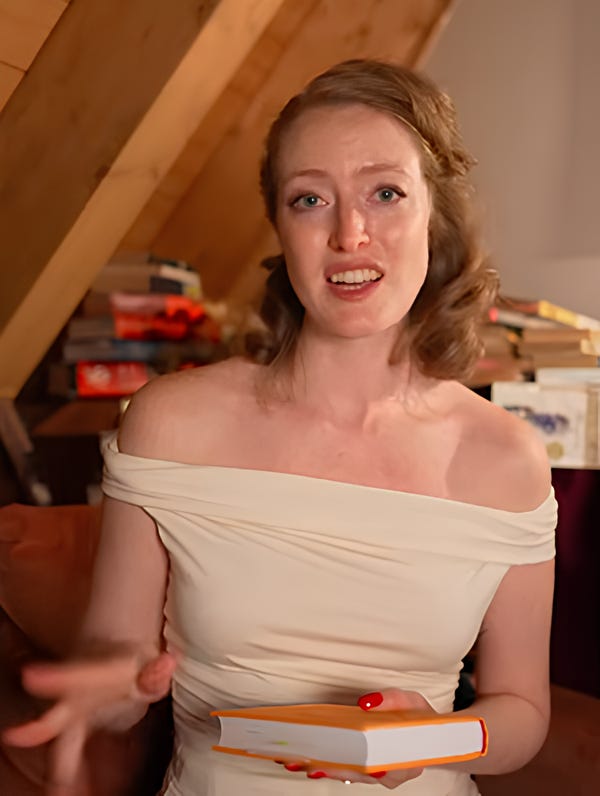
This text about deep-diving into inner peace interrupted me in the middle of work. I had forensic accountants chasing me about one of my businesses, and I’d just been forced to let three people go from the other one. One of these is a woman of exactly my friend’s age and professional profile, except she has two kids and has not wasted her late thirties finding herself. She and the other employees I’d had to lay off all found new positions quickly, but for my friend, the job search is much harder.
I responded as gently as I could:
ME: With love, you can provide for yourself. You’ve just been outside of the job market for a long time. Employers find this weird, so it puts you at a disadvantage. All you need to do is apply more and wider to overcome that disadvantage. You’ve overcome worse disadvantages before. You are good at this. Just don’t give up.
HER: I don’t want to be an employee. And I haven’t determined a strong enough product/service to offer in place of working as an employee. I have so many skills and no clear path to apply them. Acknowledging that I am my own worst enemy is hard, day after day.
I told her she was overthinking this, and she started sending me panicked messages about how she just wanted to provide the best possible life for her dog.
We’d been friends since we were twenty. I’d been so proud this tall, scary-funny, sassy, intelligent girl wanted to hang out with me in college. Now she seemed to have become so weak. I knew she wasn’t talking to her parents, and she’d just been through this bad breakup. Here we go again, I thought, and pressed the call button.
She burst into tears at the sound of my voice, which didn’t surprise me.
Millennial Women’s Envy
I have this strange effect on American Millennial women: they cry at me. She’ll be telling me how miserable her life is, I’ll point out that problems have solutions and she can surely find them. At that, invariably, tears and accusations. I’m making her feel “not seen” because of my privilege.
What privilege, I used to wonder? My life’s trajectory after college shouldn’t shock anyone: marriage to my college boyfriend, two daughters two and a half years apart, a couple of failed business ventures and two successful ones. A lot of that I did with the help and guidance of more experienced and successful people, people who I didn’t cry at.
But now, in my forties, I have come to understand the envy of the Millennial Aunt. A quarter of them have never been married,1 and almost none have children; the exceptions are almost all international students. Most of the American women my age who I know are on some kind of long-term psychoactive medication (compared to only 25% of women in the country as a whole, but remember I made my American friends in college).2 None of them have started a business (baking cookies or giving your friends advice on how to be less anxious is not a business) or taken care of an ailing grandparent.
Why is that? The answer can’t only be “standard of living.” The US is far wealthier than Bulgaria.3 It can’t be something globally wrong with my generation either; plenty of women my age in Bulgaria have children about the age of my daughters and a stable career or a business of their own. Many are getting ready to take care of their aging parents.
So What Went Wrong?
My fellow Tortugans ask this question every day on our private Telegram, with brave-looking emojis that conceal real, uncomprehending horror.
To an outsider who shared these women’s formative years in college and then kept in touch through their lives’ milestones, the answer is obvious. Although nobody - least of all their parents - would admit it, Millennial women in the US were sold a bill of goods:
College is for experimentation and finding yourself.
Pretty girls are dumb. No one will take you seriously if you’re pretty.
Go to grad school. You have time.
You must choose a profession that reflects who you really are.
You have to play the field before you commit to a man.
Don’t move to be with him.
Getting married early is low class. Having kids in your twenties is shameful.
Above all, you must be comfortable. Stress and hardship will scar you forever, so avoid emotional trauma at all costs.
I’m going to say this is bad advice.
My husband and I didn’t invent our lifestyle. We learned it in college and later as young professionals in Boston from older friends and respected professors. Many of my friends, though, absorbed snake oil. Ask my friend today and, yes, she will tell you all about playing the field, while depressed and alone.
What do you say to that? If I tried to rescue her, she’d fight me all the way and blame me for the trauma afterward. The usual advice is to “support them and tell them we’re here for them,” which sounds like it came from that girl with the nail in her head.
Education Is an Investment
Everyone thought I was unimaginative for spending my expensive American education on technical classes. No, I did not take Perversion in Victorian Poetry - Bulgarians do not need these classes - but the bigger difference between me and my peers was who was paying for our education.
My college’s financial aid strategy came from an era when young American men needed capable and exotic imported brides, so it agreed to foot most of my (enormous) tuition bill. Four-hundred-year-old institutions of higher learning had found an intelligent and socially acceptable way to ensure that the sons of their traditional donor families would find suitable female companionship to either continue the bloodline or at least have an emotionally enriching experience along the way.
Of course I knew that. My calculus study group partner, who tried to explain to me what the phrasal verb “to make out” means, knew it too. The American girl in my political economy class, who accused me of dressing up too much for class, knew it. So did the upperclassman who tried to pick me up by explaining that my country had eleven time zones (he thought I was Russian). I also knew I would leave college with a student loan to pay off.
My dad told me to study economics, because Americans knew about money, but my American girlfriends thought materialistic thinking was crass. Their parents paid their bills and told them to have new experiences and find themselves, so they studied anthropology, sociology, or government with lots of performance art classes (except the poor fools who went into the sciences and consigned themselves to a decade of credential-seeking serfdom pumping out papers on climate change). Few ever exceeded their intellectual achievements in college. By age thirty-five, they all needed therapy.
Now, okay, I did marry an American man, just as the system intended, but when I was denied an H-1B visa, I took him away to Eastern Europe. This removed us both from the American taxpayer pool and turned a net profit on the whole venture. My American economics degree was a good investment, after all.
Losing Yourself, Finding Yourself
My mother is sixty-five and has four grandchildren, but many American women in their seventies have no prospect of grandchildren at all. Boomers in the US are sad, because their daughters are either radicalized academics or jobless and trying to find themselves in their forties. Their daughters will never have children unless they froze their eggs a decade ago.
But honestly, having been through two pregnancies in my late twenties and early thirties, I know that eggs are not the only problem. Making a baby is tough on your body, and that’s only the beginning. Babies are fragile; toddlers aggressively suicidal; pre-schoolers need active running around, which occasionally lands them in the emergency room; elementary school students need domestication; middle schoolers must learn how to study while accepting their fast-changing bodies; and high schoolers … we just got our kid to high school. Give me a second to catch my breath.
A mother’s job starts at birth and lasts the rest of her life. She runs this gauntlet - staying up all night, fighting the world in order to make this screaming little grub into a functional, intelligent, good person. It’s hard to do that if you’re in your fifties, and you can’t do it at all if you’re afraid of stress.4 Cowardice consigns you to a sterile, substandard life. It makes you make yourself an invalid.
The Madwoman in the Attic
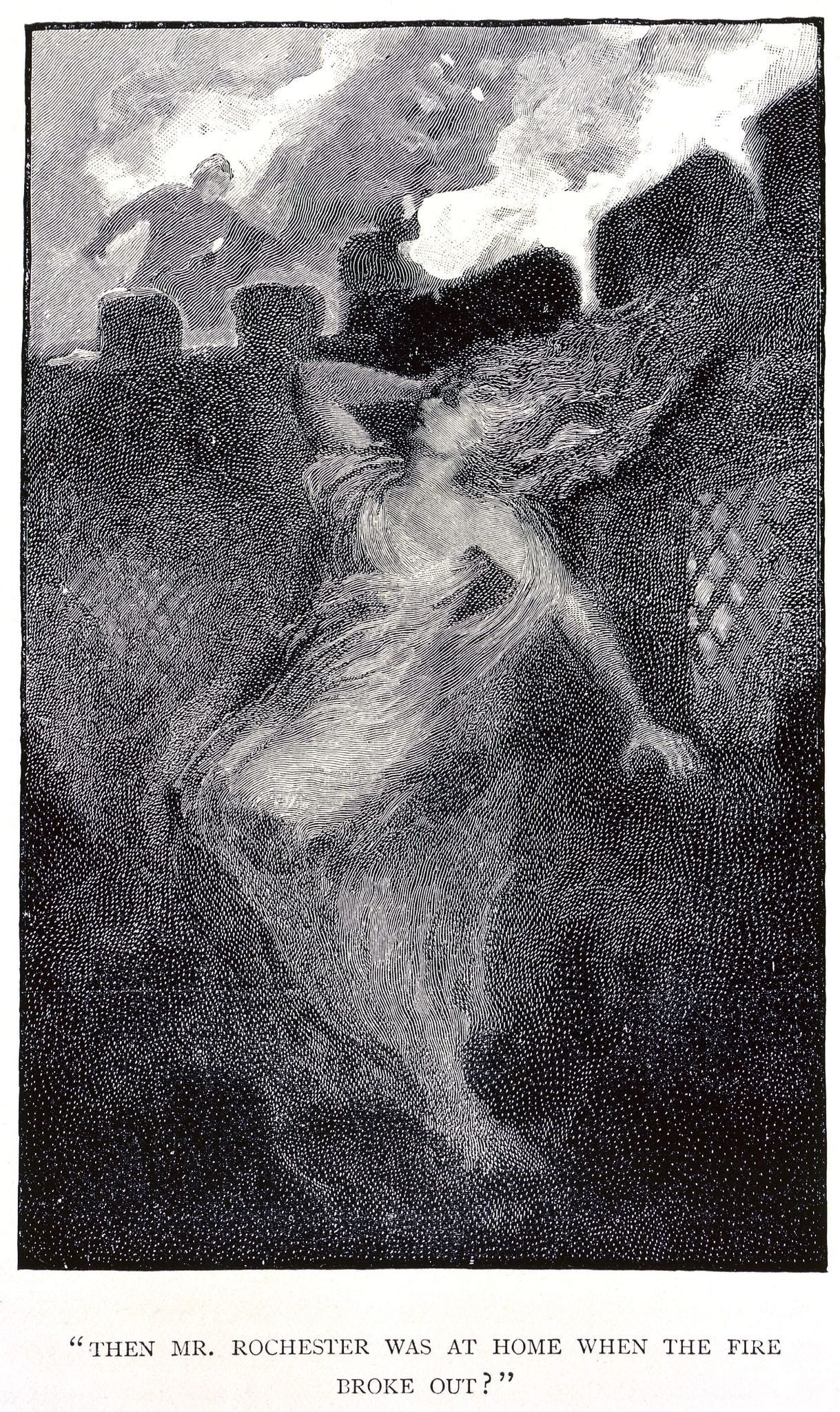
Remember the Victorian archetype of the crazy old aunt locked in the attic? Millennial Aunts have enthusiastically accepted this role. They signed on for the Bertha Mason Premium Plan and locked themselves into a self-indulgent prison. They thought victimhood was romantic, or, God help them, empowering.
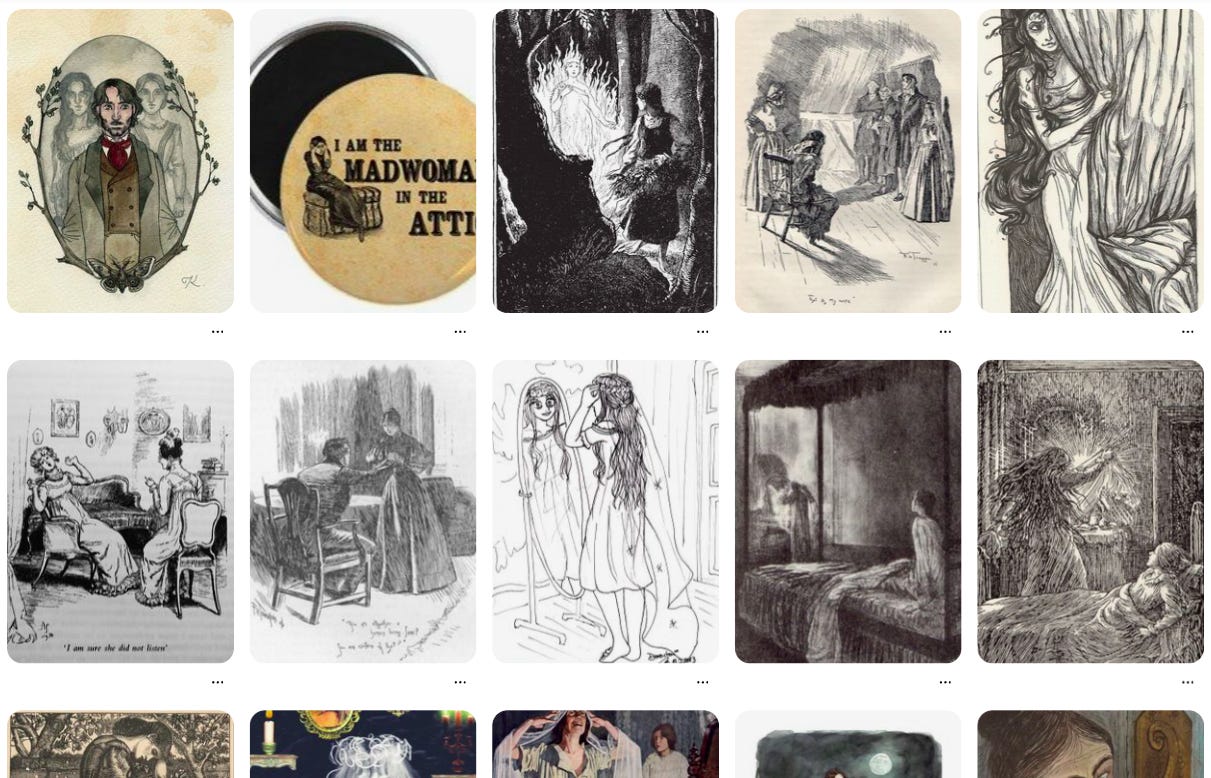
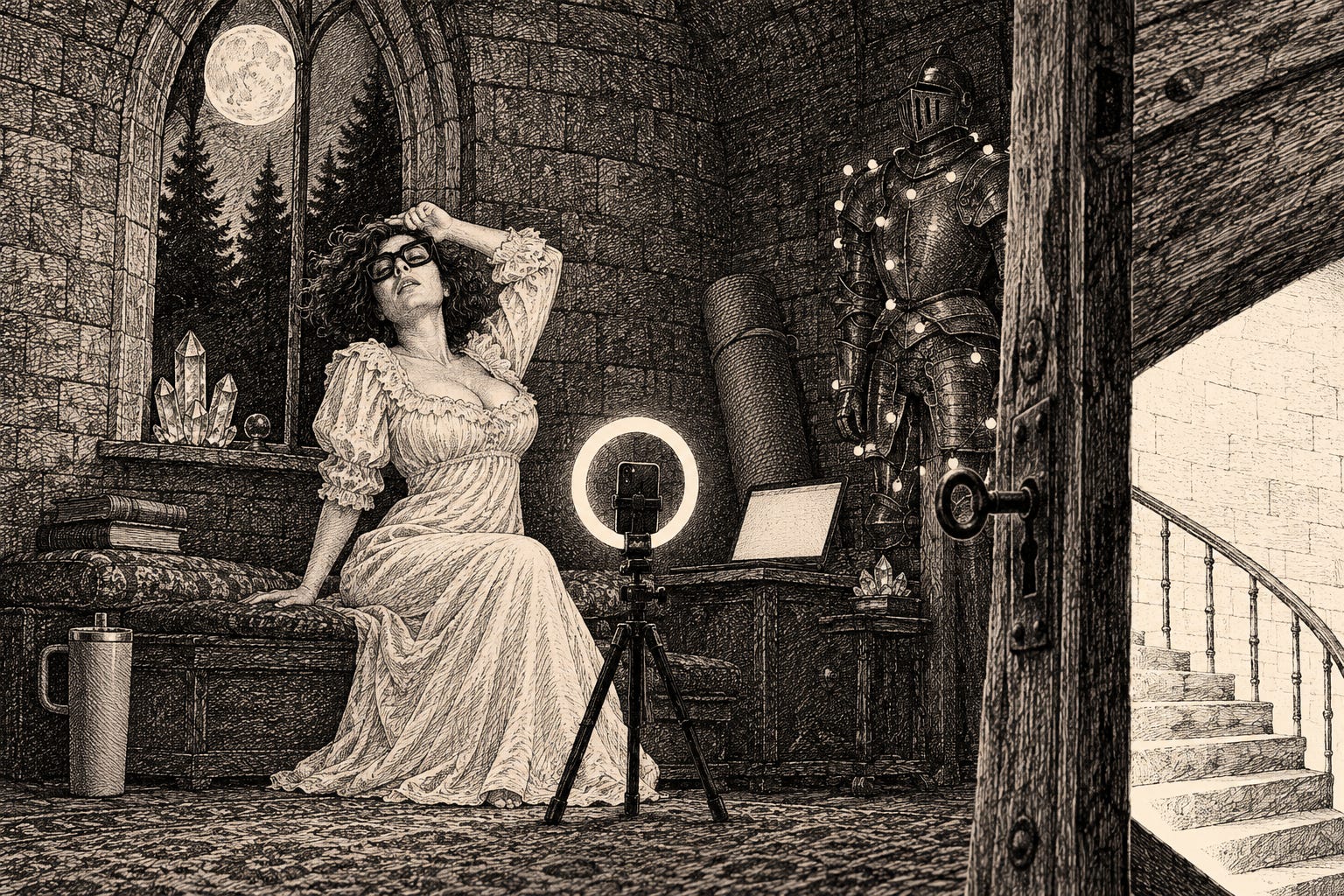
Like my jobless friend, many of these spinster-aunts would rather wallow in genteel decay than get back on their feet. They’ve trapped themselves in useless degree programs or scammy nonprofit jobs, because that’s what feels safe. Nobody locked them in this attic. They just won’t leave. They’re shrieking, moaning, crawling around up there, getting worse. They could stand up and come downstairs, but that would be hard.
How Do You Deal with the Madwoman in the Attic?
That depends on whether she is your woman and whether it’s your attic.
If not - that is, if you don’t love her - just stay away. But what if you do love her? Yes, she was lazy. Yes, she’s crippling herself in order to guilt the rest of us into taking care of her. But we have to do what’s best for the people we love.
What’s “best”? Do you lovingly bring the aunt in the attic some more laudanum? Make sure she’s securely locked in up there? Assure her that her lifestyle is valid? Or do you open the door, tell her it’s time to find a job, and point out that you’ll be renovating the attic next month, so she has four weeks to find a new place to live? Thank God for my friend’s landlady.

If you love your Millennial woman, and, like me, you don’t believe in the “every lifestyle is valid” bullshit that put her into the attic in the first place, you have only one choice. Force her out.
Pew Research Center, “A record-high share of 40-year-olds in the U.S. have never been married,” 2023.
We just adopted the euro and are running at almost 6% inflation. A new record!
Some women my age tell me that, once they’ve found themselves, they can always adopt, which is like saying “I grew up without leaving my bedroom and now I plan to run for office.”
