

Meet the new boss, same as the old boss.
- The Who, “Won’t Get Fooled Again”
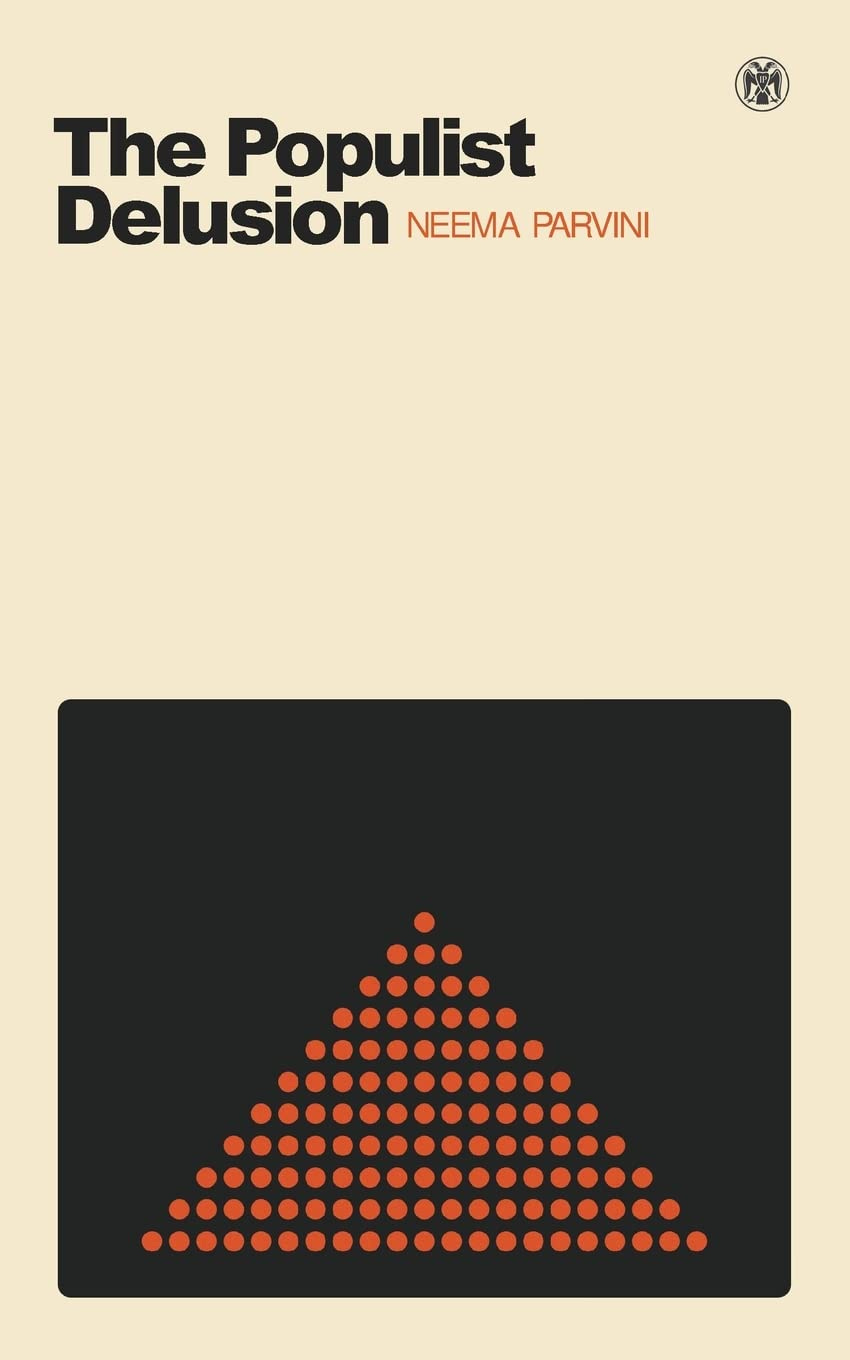
There’s a particular kind of book that gets written in the wreckage of a movement. It’s the book that explains why the movement failed, why it was always going to fail, and why the people who believed in it were deluded. It’s written by someone who’s given up, with a certain texture of giving up: the sense that the author has finally seen through the illusion. It feels like an epiphany, like the scales falling from the eyes. It is, in almost every case, just the author rationalizing his own despair.
Neema Parvini’s The Populist Delusion is just such a book. Published in April 2022, at the lowest point of the populist project’s fortunes, it arrived as a postmortem for a movement that had just spent four years being contained, humiliated, and buried. Trump had lost, January 6 had happened, the Never Trumpers were gloating. The pundit class had declared the populist moment a fever that had broken. Into that wreckage, Parvini tossed a book that said, “Ehh, it was never gonna work anyway.”

Parvini’s argument, if you strip it down to its bones, is elegant and grim. The 2016 Trump campaign was the first genuine populist awakening in generations, a mass movement that sensed something true about the corruption and self-dealing of the ruling class… but the movement’s understanding of how change happens was delusional.
The populist believes in popular sovereignty, that The People are the source of legitimate power, and if enough of them demand something, it will come to pass. Parvini says this is a fairy tale. Power never flows upward. Instead, it circulates among organized minorities who replace one another in an endless game of elite circulation. The masses are at best the raw material for this process. The infantry, never the generals.
The people belong to no one!
They are fickle, can be manipulated!
They don’t matterTim Rice, “Dice Are Rolling,” from Evita
Underneath it all is a metatrend that Parvini draws from the elite theorists, which you can see operating in every political system, every institution, every election: incentives drive behavior. (You may have noticed I tend to latch onto this as a general operative theory.) The elites do what their incentives tell them to do, and their incentives are always about preserving and ideally expanding their own power.
The elites have concentrated incentives, which means they act with focus and discipline. The masses have incentives too, but theirs are unorganized and easily manipulated. In any contest between focused discipline and passionate chaos, the discipline wins, at least most of the time.
Parvini builds on the classical elite theorists, whom the academy buried and the Right mostly forgot: Mosca and his ruling class, Pareto and his circulation of elites, Michels and his iron law of oligarchy, Schmitt and his decisionism, Jouvenel and his observation that every revolution merely swaps one master for another, Burnham and his managerial revolution, Francis and Gottfried and the contemporary right-wing critique of the permanent government. The through-line is that democracy as actually practiced is theater, in which competing factions of elites seek the ratification of the masses and the masses oblige by choosing the option they’re given.
Parvini’s conclusion is the part that made his work controversial on the Right. Political change is always top-down, driven by organized minorities who have seized the commanding heights of institutions, culture, and state power. The Left understood this better than the right ever did. The Gramscians, the Frankfurt School, the whole apparatus of cultural Marxism that conservatives love to decry: they grasped that you win, not by winning elections, but by capturing the institutions that shape what people believe. (In theory, elections are why freedom of the press matters, but if the press is ideologically captured such that alternative viewpoints are canceled, you have lost freedom of the press even if the law theoretically says otherwise. In the same sense, poll taxes kept people from voting if the elites of the time felt it might be disruptive; their voting rights were de facto canceled.) The populist right spent 2016 to 2020 believing that the ballot box was the battlefield. Parvini says the battle was always elsewhere, and the Right lost it decades ago.
Now, the critiques. They come from every direction, which is always a good sign that a book has touched something real.
The Left critique is the obvious one. Elite theory is a counsel of despair. If the masses can never rule, if every revolution just swaps one elite for another, then the entire project of human emancipation is a fool’s errand and the only rational responses are either quietism (Zen acceptance or prepper hermitage) or a cynical, mercenary scramble to join the winning elite. The book is a political sedative, and, the Left claims, historically illiterate. The abolition of slavery, the labor movement, the suffrage campaigns, the civil rights movement: these were mass movements that did change the structure of power.
The populist-right critique has real teeth. Parvini is a defeatist. He watched Trump lose a single election and concluded that the entire project was doomed. The populist movement did not fail because mass politics is impossible. It failed because it was betrayed. The swamp creatures who had ridden the movement into office governed like the people they’d replaced. The answer is not to abandon the masses but to purge the movement of its traitors and build better institutions. And let’s be fair: 2016 Trump walked into that office surprised that he won. He was unprepared for the job and didn’t have his team ready to go. (Not to telegraph the later part of this essay, but it would turn out that his 2024 reprise was not nearly so blindsided.)
The academic critique: elite theory is a nineteenth- and early twentieth-century artifact. Mosca and Pareto were writing before the rise of mass media, the internet, and the welfare state, and before the administrative state reached its current scale. Their models of elite circulation are too simple to capture the complexity of modern governance, where power is dispersed across agencies, courts, corporations, media conglomerates, and transnational institutions. The iron law of oligarchy is not really a law. It’s more what you’d call guidelines.

The empirical critique, related but distinct: Parvini’s claim that mass movements never change anything is falsifiable, and the historical record blows a big hole in it. The French Revolution, the Russian Revolution, the Chinese Revolution: these were not elite circulation, but decapitation - cataclysmic rearrangements of society driven by mass mobilization. Arab Spring, whatever its ultimate outcome, toppled regimes that had seemed permanent. The 2016 election itself, the very event that inspired Parvini’s book, was a mass movement that changed the government of the United States.
But the steelman of the book’s premise is stronger than most of its critics want to admit, especially when you look at how history has shaken out. Start with the hardest question the critics face. If mass movements are the engine of change, why do they so consistently produce outcomes that contradict the will of the people who participated in them? The French Revolution abolished the monarchy and produced Napoleon. The Russian Revolution overthrew the Tsar and produced Stalin. Arab Spring toppled dictators and produced new dictators (or civil wars). The American populist wave elected Trump and produced, what, a presidency largely contained by the institutions it promised to dismantle? The People don’t win. The People break things and watch someone else pick up the pieces.
The critics who cite the abolition of slavery or the civil rights movement are committing a category error. Those movements did not overthrow the elite. They appealed to a different elite or to a faction of the current one, gave it an incentive for change, and won a place within the existing structure.
A coalition of the most powerful economic and political forces in the North, imposed abolition on the South by military conquest. The civil rights movement succeeded because it found allies in the federal judiciary, the presidency, and the northern wing of the Democrat Party, and because the Cold War made American racial segregation a geopolitical liability. The masses marched, yes, but the decision was made in the corridors and enforced by the 82nd Airborne or the National Guard threatening the governors of Southern states.
The defeatism charge is the weakest critique because it mistakes diagnosis for prescription. Parvini is not telling the Right to give up, but to stop wasting its energy on the wrong battlefield. If the masses cannot rule, then the project is to build a counter-elite. The Right should be doing what the Left did in the 1960s and ’70s: infiltrating and redirecting the universities, the media, the judiciary, the bureaucracy, and cultural institutions. The Left ran a very successful fifty-year subversion campaign and transformed the country.
The academic critique, that elite theory is outdated, goes the other way. The modern administrative state is not a refutation of elite theory, but its apotheosis. Never in human history has so much power been concentrated in so few hands, and never has that concentration been so thoroughly disguised by democratic ritual. The iron law of oligarchy has been strengthend repealed by modernity, but strengthened. Bureaucrats do not stand for election. They do not fear replacement because they are protected by their unions and a politically allied judiciary. This is the premise behind the deep state thesis. Populism is rising in Europe out of similar anger with malgovernance.
The empirical critique, that mass movements have changed history, reveals most about the critic’s own assumptions. What changed history was not the mass movement, but rather the organized minority that captured, directed, and used it. Lenin did not create the Russian Revolution, but he did create the Bolshevik Party. It was the Party, not the masses, that seized power. (This not-so-cleverly overlooks the Mensheviks, but never mind that.)

Now here’s where the incentive lens gets its sharpest application, because the 2020 election is the purest example of elite theory in action that America has ever produced. Watch what the elites did when their incentives aligned perfectly. They had a man in the White House who threatened their power, who promised to drain the swamp, who was actually attempting to dismantle the administrative state. The incentives were unambiguous: remove him, at any cost, and so they did. The Russia collusion hoax, the two impeachments, the suppression of the Hunter Biden laptop story, the censorship of the New York Post, the coordination between the intelligence community and the media, the unprecedented expansion of mail-in voting, the ballot harvesting, the vote counts that went on for days, the legal challenges that were dismissed, the whole apparatus of the deep state and its media allies, corporate partners, and social media enforcers: all of it was aimed at a single target with a single purpose.
The elites acted with focus and discipline because their incentives were focused and disciplined, and they won. They produced an unprecedented number of votes, a number that strains credulity, a number that will be debated for generations, but they managed to remove Trump and install their vehicle.
The election of Joe Biden is Parvini’s thesis demonstrated in real time. The masses voted in 2020, yes, but the election’s outcome was manufactured by the concentrated incentives of the ruling class.
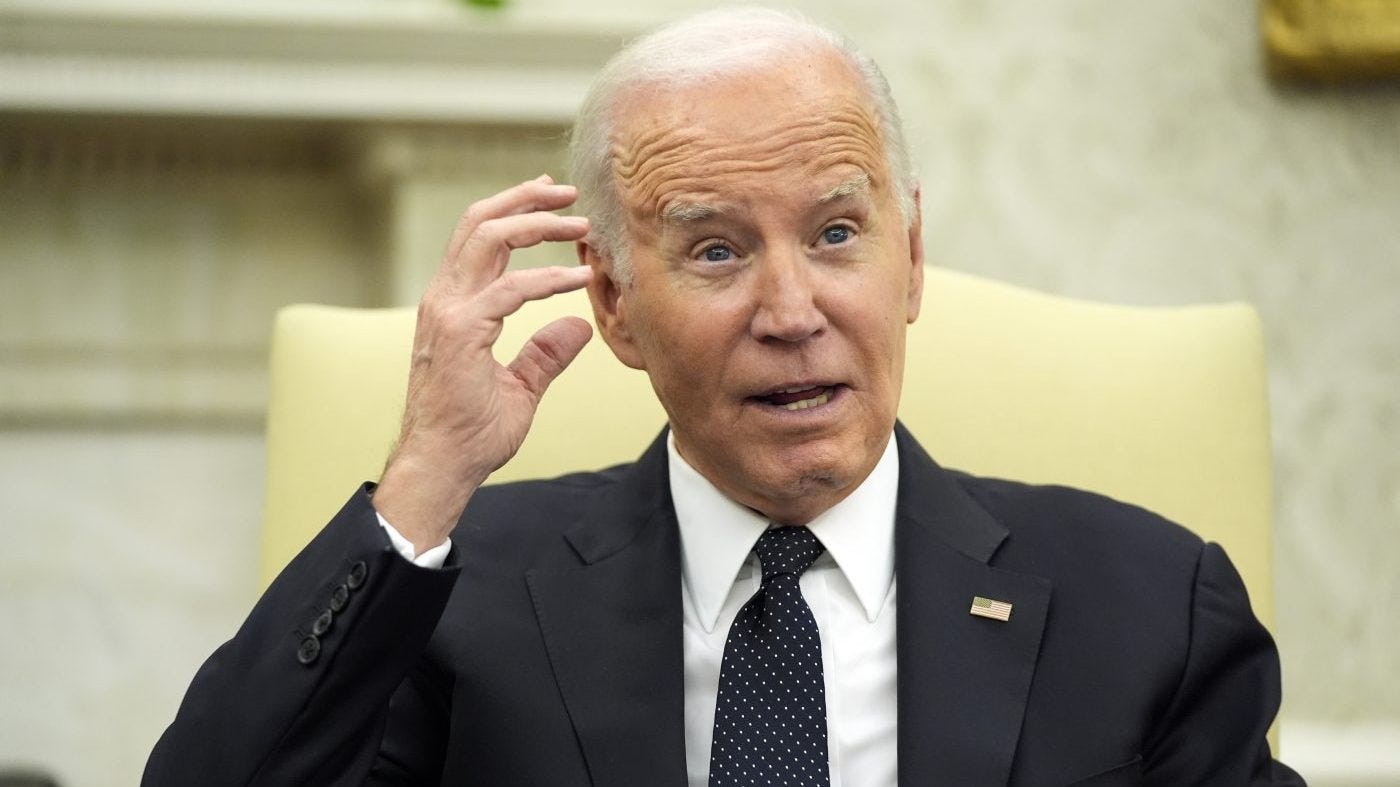
But you may have noticed that incentives have second-order effects, what’s commonly referred to as “unintended consequences.” The 2020 victory was Pyrrhic - the most expensive win in American history - and the bill came due four years later.
Watch how the incentive structure shifted, and how the elite coalition that had been so disciplined in 2020 began to fracture under the weight of its own success. The first crack was immigration. The elites had an incentive to import voters. Open the borders, grant amnesty, naturalize millions, and each new citizen is a likely Democrat.
It’s the oldest trick in the machine-politics playbook, Tammany Hall with a globalist accent. And so they appointed the most radical border official in American history to run the border: Kamala Harris. She let the floodgates open and millions came! Imported voters were the future.
The strategy was rational in the short term, but the backlash was the present. The working-class voters who had been the Democrat base for generations watched their wages stagnate, their neighborhoods transform, their communities strain under the weight of mass migration. They drew the obvious conclusion. The party had abandoned them for a cheaper, more pliable constituency. The incentive to import voters was rational for the elites, but catastrophic for the coalition.
The second crack was the interest groups. The Democrats had spent decades cultivating a coalition of identity-based constituencies: the Woke Left, the trans activists, the intersectional academics, the diversity-industrial complex. These groups had their own incentives, and those incentives diverged from the Democrat elites. The groups wanted maximal demands met. They wanted purity. They wanted to push the envelope. The elites just wanted to win elections.
The groups pushed too far: the pronoun wars, the defund-the-police slogans, the drag queen story hours, the trans athletes in women’s sports, the whole carnival of excess that alienated the median voter, and the elites couldn’t control them. The big tent was held together only by the shared incentive of defeating Trump, and once Trump was defeated, the factions began to devour each other.
The third crack was the coup. The elites had installed Biden as their vehicle in 2020, a man who could beat Trump, a man who was acceptable to the coalition, a man who would do what he was told. But Biden was failing. His approval ratings were in the toilet. The cognitive decline was visible to anyone with eyes. And the elites had to make a choice: stick with the failing vehicle and lose, or replace it and hope. They replaced it in a move so transparently antidemocratic, so obviously a backroom deal, that it alienated even the Democrats’ base. (It still feels to me like the Harris nomination was a hand grenade that Joe Biden threw into the works as revenge on the DNC for pushing him under the bus. Harris was politically impossible for them to refuse because of the optics of a black female candidate who was the natural current successor, but she was a gift to the Trump campaign.)
The primary voters chose Biden, and the elites overruled them. The masses voted for one candidate, and the elites handed them another. That is the antidemocratic core of elite rule, laid bare for the whole country to see. The coup worked in the narrow sense that Harris became the nominee. But the base was demoralized, the enthusiasm was gone, the whole thing collapsed, and Trump came back.
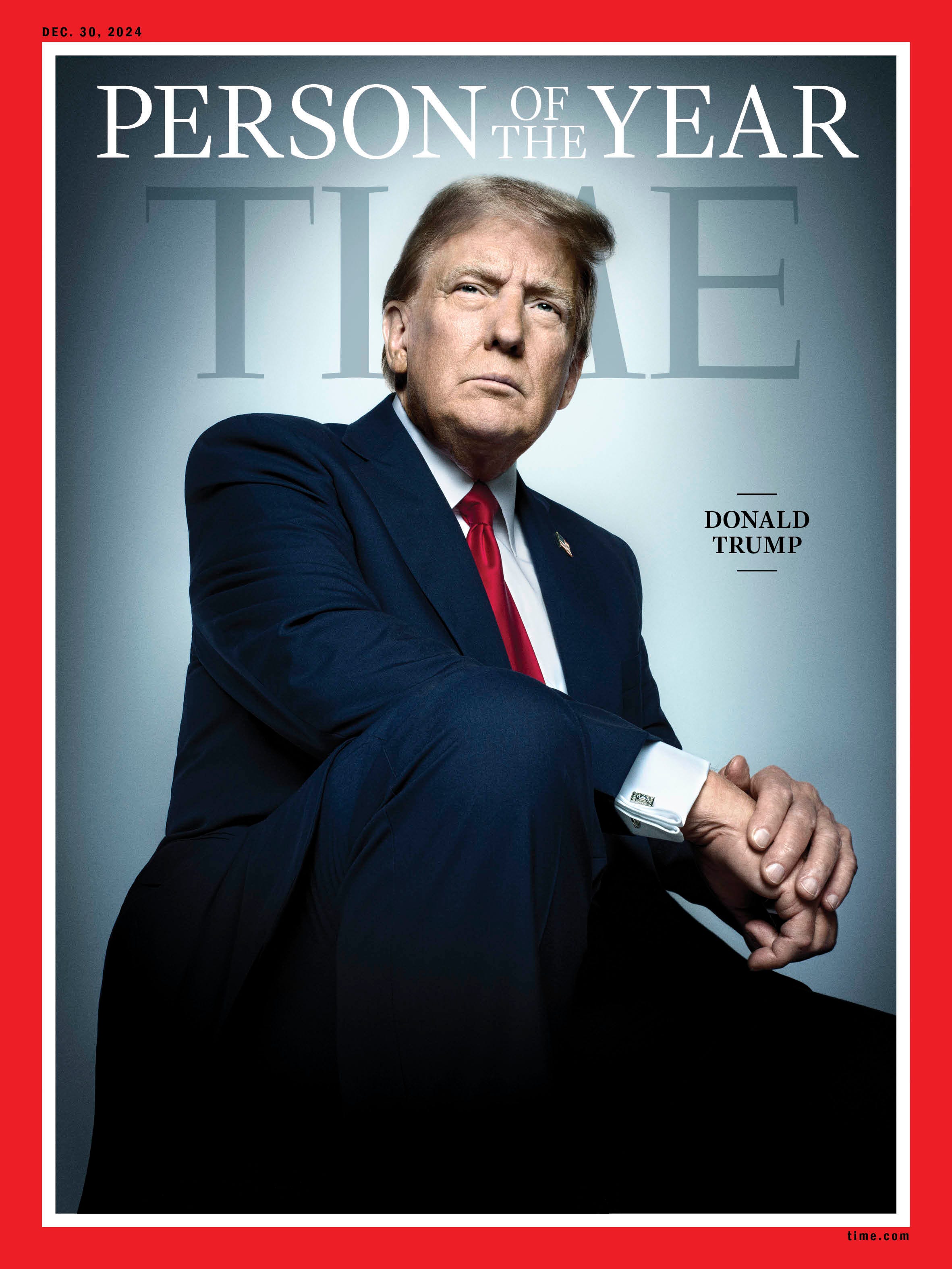
Trump came back. Not a successor, not a fresh face, not a new vehicle for the movement: the same man. The one the entire establishment had spent eight years trying to destroy, through two impeachments, January 6, legal prosecutions, felony convictions, an assassination attempt that came within a quarter inch of killing him. Trump was the first Republican to win the popular vote in twenty years, and the first president elected to nonconsecutive terms since Grover Cleveland, in the nineteenth century, in the Gilded Age, before the modern party system, the primary system, and the permanent campaign, before the media environment made every defeat a permanent stain.
If mass politics is a delusion, if the people are never the engine, if change only comes from organized minorities, then how do you explain the most improbable political comeback in the history of the republic, driven by the most mass-oriented political movement in living memory?
The Parvini answer is available, although you have to steelman it hard. Trump got reelected because the movement did what Parvini told it to do: become a machine. The populists built think tanks, a media ecosystem, a legal pipeline, a party apparatus, a donor network, and a data operation. They purged their enemies and disciplined their cadres. They learned from 2020, and ran the 2024 campaign like a military operation. The masses were always there, but in 2016 they were a mob and in 2024 they were a constituency.
2016 proved that the masses could put a man in the White House, 2020 that the elites could remove him, and 2024 that the counter-elite could bring him back. Trump got contained because the movement had no infrastructure, no cadres, no plan, no way to convert victory into governance. The second term is attempting things the first term never could because the movement spent eight years building capacity. The people did not change, but the organization did. The Right did exactly what Parvini prescribed, probably without reading a word of his book. It would make him laugh if he had a sense of humor about it.
Trump’s return reveals that The Populist Delusion’s disillusionment was a misreading of a temporary defeat as permanent. The book’s analysis of how power works may survive, but its diagnosis of the specific moment was wrong.
Worse for Parvini’s thesis, if Trump’s return was the work of the organized minority, then the organized minority was itself the product of the mass movement. The machine was built by people who were radicalized by 2016 and activated by the movement, who devoted their careers to it because the masses showed them that the project was viable. The counter-elite did not emerge from nowhere. The masses created the conditions for the new machine, even if the machine then took over.
So, the dichotomy between mass politics and elite action turns out to be false. The masses are not the engine, but they are the fuel, and without fuel, the engine does not run. Parvini himself says that the masses are necessary but not sufficient. The book’s rhetoric, however, keeps sliding toward the stronger claim, that the masses are irrelevant, and the return exposes that slide.
So how much does Trump’s reelection change the game? Completely. It changes The Populist Delusion’s genre from tragedy to comedy in the Dantean sense: a story that begins in hell and ends in redemption, or at least in the possibility of redemption. Parvini was right about the medicine and wrong about the death. He prescribed the cure for a patient he had already written the death certificate for. The patient got up off the table, took the medicine, and went back to work.
The last time this happened, the country was in the middle of the Gilded Age, the original era of elite rule, the robber barons, the political machines, the era that produced the first great American critiques of democracy itself. And now it’s happening again in the era of the administrative state, the permanent government, the managerial class. Maybe Trump’s return is the exception that proves the rule. Or maybe it’s the rule itself, the organized minority doing what organized minorities do, and the masses just happened to be on the winning side this time.
Join the Tortuga Society to take part in September’s book club discussion: Starship Troopers by Robert A. Heinlein.
Great post, Professor!